


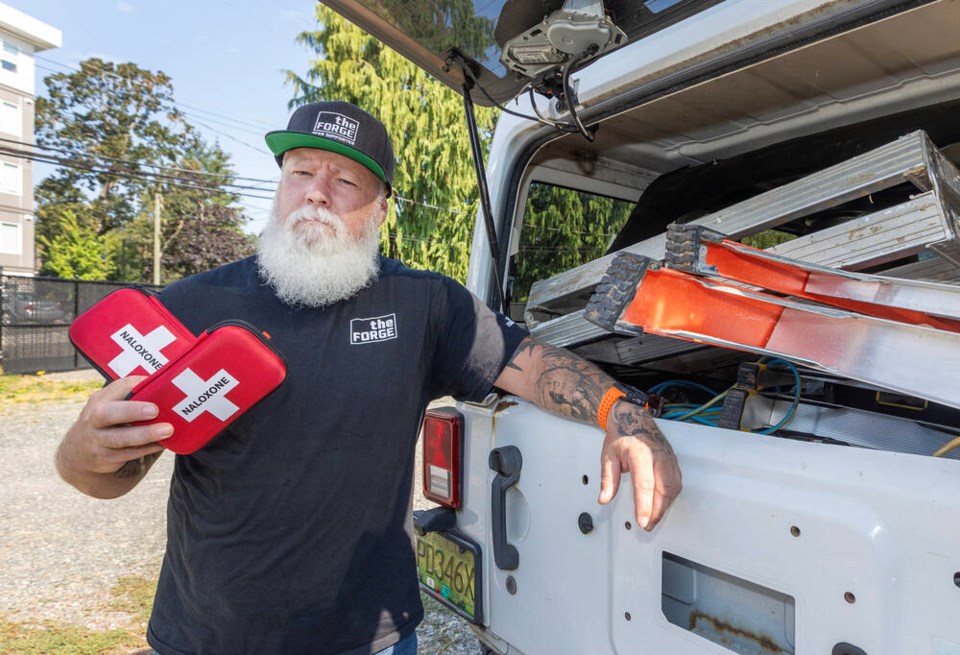
For Trevor Botkin, Sunday’s International Overdose Awareness Day is a chance to reflect on his journey with addiction.
The manager of industry relations for the Construction Foundation of British Columbia said his experience with addiction was worsened by the stigma associated with asking for help, especially in a male-dominated industry.
Now in recovery, Botkin advocates for widespread job-site access to the overdose-reversing drug naloxone, along with a shift in culture at trades workplaces.
“Overdose Awareness Day is a chance to reflect and look back on the loss, look forward at solutions and how we can empower people to be a part of the solution,” Botkin said. “On my shoulders, I carry the grief of a lot of losses over the last 10 years.”
Thousands will gather worldwide Sunday to commemorate International Overdose Awareness Day, as B.C. marks nine years since illicit-drug-related deaths and injuries prompted the declaration of a public health emergency.
So far this year, the Vancouver Island Health Authority has recorded 163 deaths from toxic-drug poisoning; 455 deaths were recorded for all of 2024.
Jan Mahoney, who lost her 21-year-old son Michael to an overdose in 2018, said the stigma of talking about his death was challenging to overcome. “It’s not something you feel you can really talk about,” she said.
Mahoney belongs to Moms Stop the Harm, a group dedicated to supporting those who have lost loved ones to overdose and advocating for an end to the toxic drug crisis.
The group is hosting a vigil at Broad View United Church in Saanich Sunday at 7 p.m., where people can bring photos and light candles in memory of loved ones they have lost. Another event, hosted by Doctors for Safer Drug Policy, is scheduled for Monday from 11 a.m. to 1 p.m. on the legislature lawn.
Of the overdose deaths in B.C. since 2022, 21 per cent were people who worked in trades, transport and equipment operations, according to the B.C. Coroners Service.
Botkin co-hosts a podcast called Off the Clock Toolbox Talk, where he interviews other trades workers about their experiences with substance use and how they found hope. A lot of trades workers turn to substance use to cope with the emotional and physical pain that can come with the job. “When we start to get in the deep end, we tend to try and hide that from even our co-workers.” Botkin said.